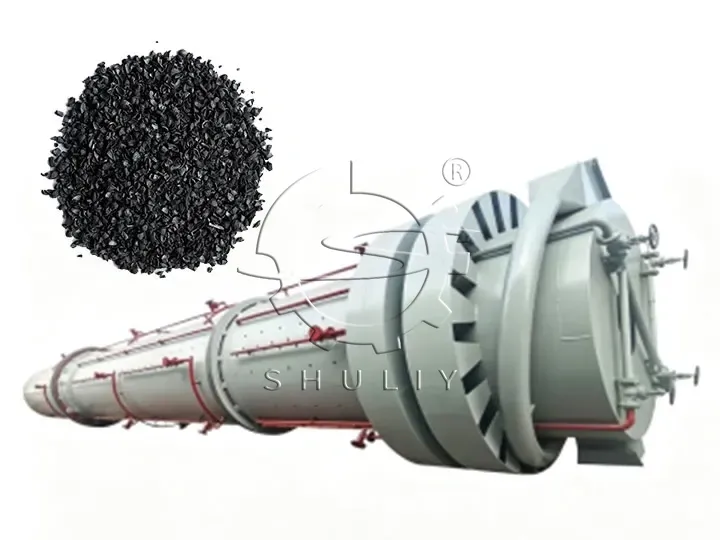
The activated carbon activation furnace is specialized for converting carbonized materials into activated carbon with a developed pore structure and strong adsorption capacity.
The rotary activation furnace primarily uses pure wood charcoal as the raw material and performs high-temperature activation without adding chemical activating agents. Depending on the production model, the equipment can process approximately 1–8 tons per day and reach activation temperatures above 1000°C.
Advantages of activation furnace for activated carbon
- No chemical activating agents required: The activation process mainly uses high temperature together with water vapor, carbon dioxide, and hydrogen as activation media.
- High activation temperature: The activated carbon activation furnace can reach temperatures above 1000°C, providing suitable conditions for activated carbon production and pore development.
- Continuous rotary operation: The rotating furnace allows materials to move continuously during activation, supporting stable and continuous production.
- Reliable sealing and process control: Sealing structures, nitrogen pipelines, heating equipment, and the measurement and control system help maintain controlled operating conditions.
- Multiple capacity options: Available models offer production capacities from approximately 1-8 t/day, allowing users to select equipment according to their production requirements.
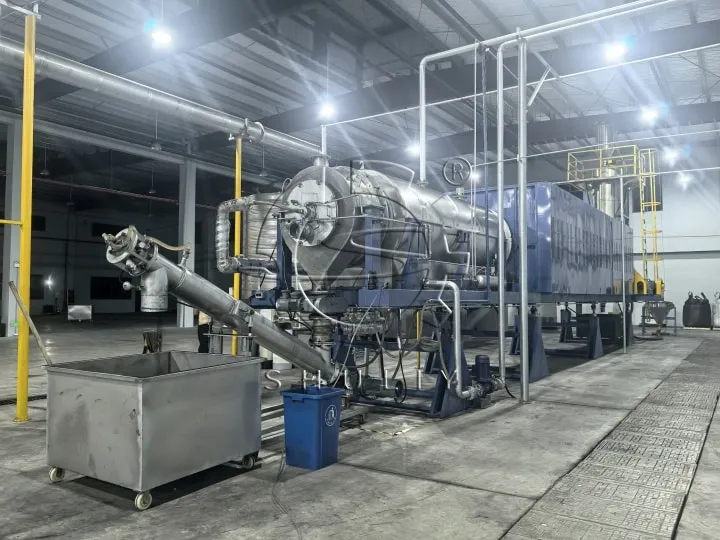
How does the activated carbon activation furnace work?
The production process usually starts with carbonized material, such as pure wood charcoal. The material enters the rotating furnace and moves forward as it is heated.
The furnace temperature can reach above 1000°C. Controlled air or oxygen helps maintain the high temperature. Steam, carbon dioxide, and hydrogen are also added during the activation process.
The high temperature and activation gases create many pores inside the carbon material. These pores increase the surface area and improve the adsorption performance of the activated carbon.
Unlike chemical activation, this process does not use chemical activating agents. It mainly uses high temperature, steam, and other gases to activate the carbon material.
Parameters of activated carbon activation kiln
| Modelo | Equipment Specification | Auxiliary Power | Production Capacity | Outline Size |
|---|---|---|---|---|
| SL-2 | 1.5 m × 11 m | 40 kW | 1–2 t/day | 11700 × 2230 × 2230 mm |
| SL-3 | 1.5 m × 15 m | 45 kW | 2–3 t/day | 15700 × 2230 × 2230 mm |
| SL-4 | 2.2 m × 18 m | 50 kW | 4–5 t/day | 18700 × 3050 × 3050 mm |
| SL-5 | 2.2 m × 22 m | 50 kW | 6–7 t/day | 22600 × 3050 × 3050 mm |
| SL-6 | 2.6 m × 22 m | 55 kW | 6–8 t/day | 22600 × 3450 × 3450 mm |
Main components of rotary activated carbon furnace
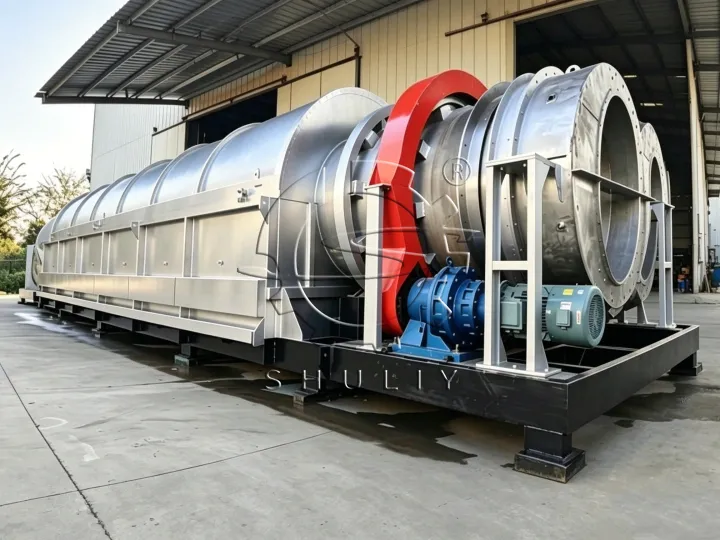
The activated carbon activation furnace is designed as a rotary system. Its main components include:
- Furnace tube
- Transmission and supporting system
- Furnace inclination adjustment mechanism
- Feeding and discharge end sealing covers
- Exhaust gas sealing hood
- Nitrogen gas inlet pipeline
- Insulation and material retaining blocks
- Heating system
- Temperature measurement and control system
The rotating furnace tube allows the carbon material to move continuously during processing. The inclination adjustment mechanism helps control the material residence time and movement inside the furnace.
The sealing structure is designed for controlled operation at the feeding, discharge, and exhaust sections. Meanwhile, the measurement and control system monitors the activation process and helps maintain suitable operating conditions
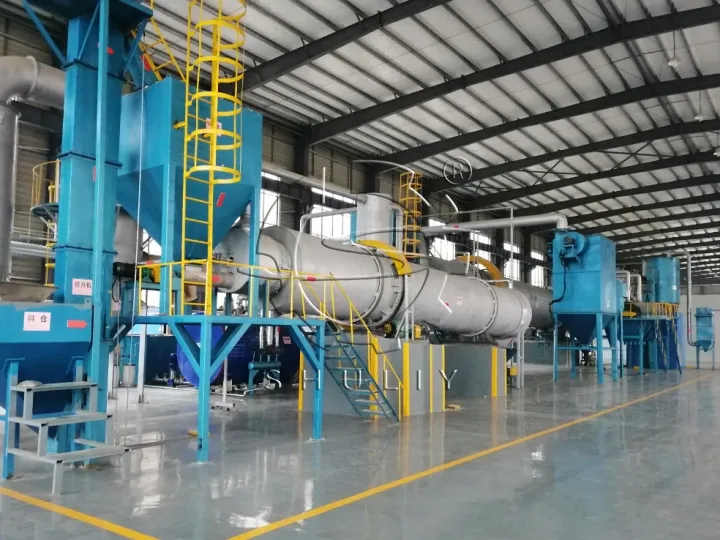
Production process of activated carbon
Activated carbon production usually includes two main stages: carbonization and activation. The carbonization furnace first converts biomass materials such as wood and coconut shells into carbonized material. The material is then fed into the activated carbon activation furnace for high-temperature activation.
Biomass → Carbonization Furnace → Carbonized Material → Activation Furnace → Activated Carbon
Therefore, the carbonization furnace and activation furnace are commonly used together to complete the activated carbon production process.
What are the application scenarios for activated carbon?
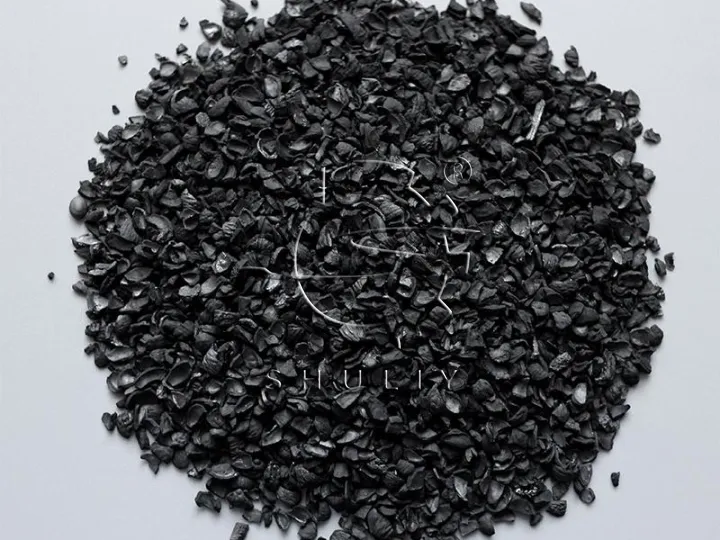
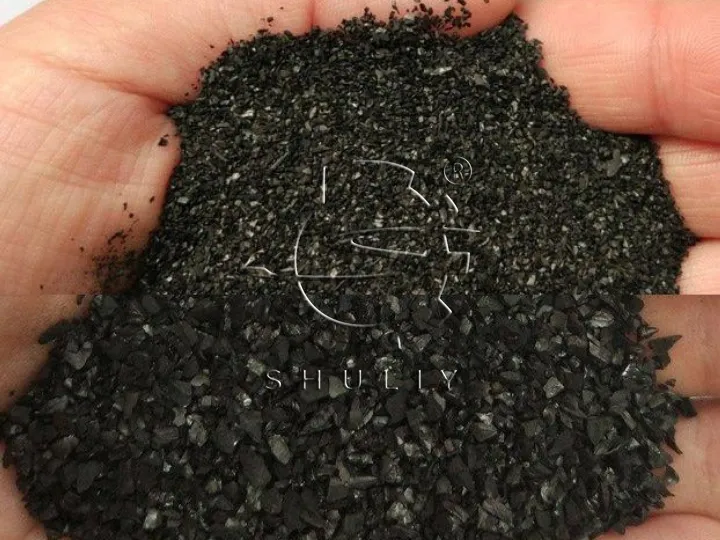
Activated carbon produced by an activated carbon activation furnace is widely used because of its porous structure and strong adsorption capacity. Common applications include:
- Water treatment: Removes organic compounds, odors, chlorine, and other impurities from drinking and industrial water.
- Air and gas purification: Adsorbs odors, volatile organic compounds, and other pollutants from air and industrial gases.
- Food and beverage processing: Used for decolorization and purification in applications such as sugar, edible oil, and beverage processing.
- Chemical industry: Used for purification, separation, and recovery of certain chemicals and solvents.
FAQ about activated carbon activation furnace
How should I choose the right furnace model?
The model should be selected according to your required daily output, available carbonized material, plant space, and production line configuration.
What after-sales service is provided?
We provide technical support for equipment installation, operation, troubleshooting, and maintenance. Spare parts and related technical assistance are also available when needed.
Can I get a solution for the complete production line?
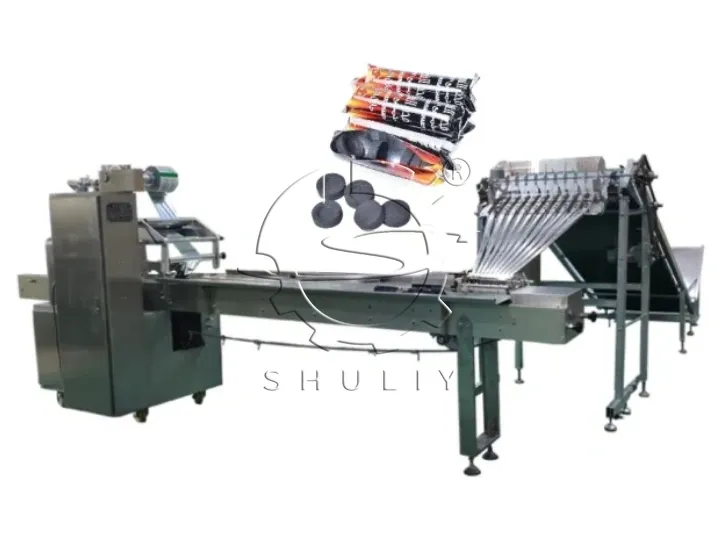
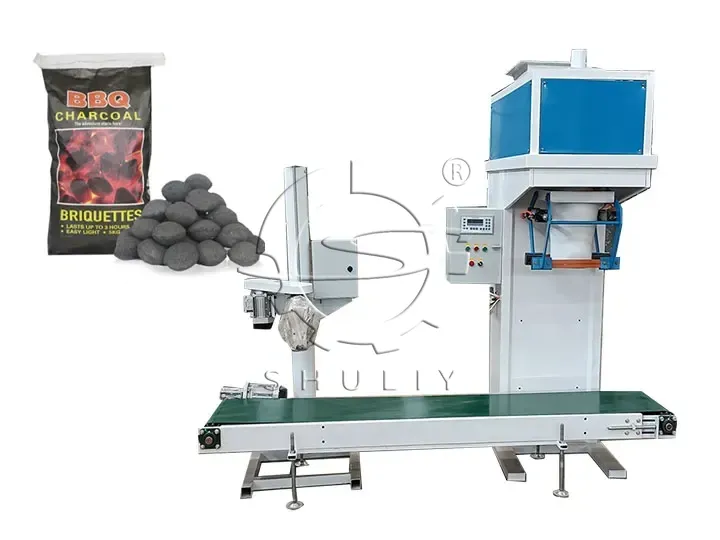
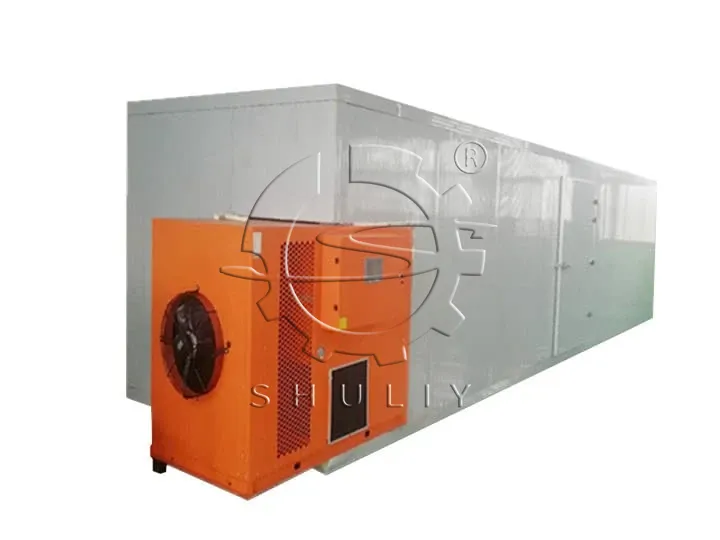
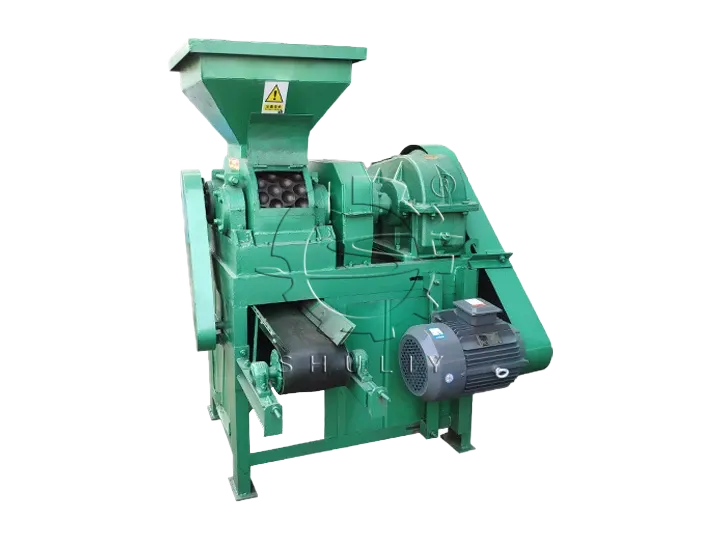
Yes. The activation furnace can be matched with carbonization, cooling, crushing, screening, and packaging equipment according to the required production process and capacity.
How much does an activated carbon activation furnace cost?
The price depends on the furnace model, production capacity, heating system, configuration, and other project requirements. Contact us with your required capacity to get a specific quotation.
Talk to us about your activated carbon production
Looking for a suitable activated carbon activation furnace? Contact us with your raw material, required production capacity, and project requirements. We can recommend a suitable furnace model and provide equipment configuration and a quotation for your production line.