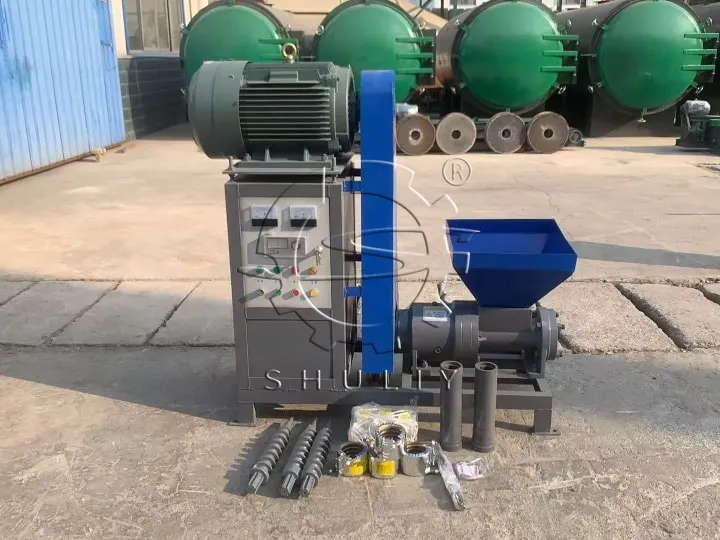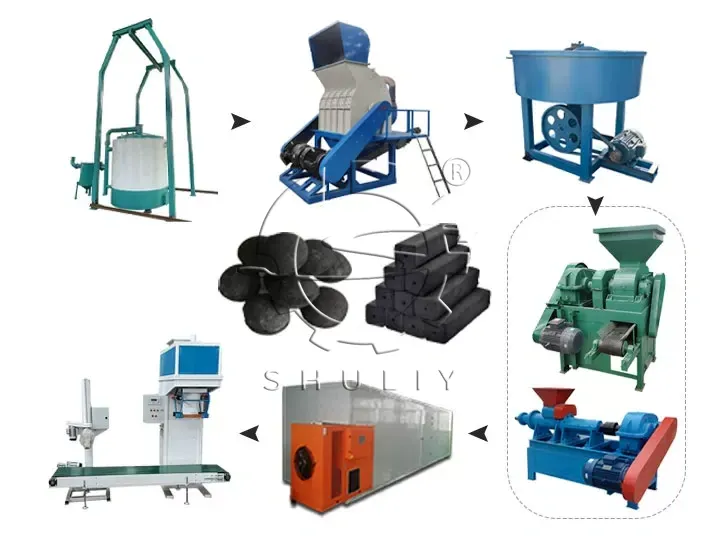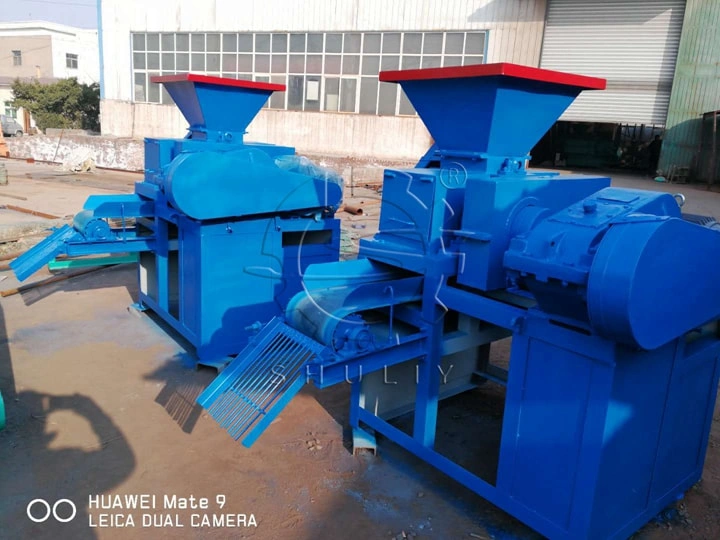
The charcoal sticks making machine is used to compress coal powder and other suitable powdered materials into solid fuel briquettes. In actual production, however, problems such as briquettes breaking, poor forming, material blockage, and unstable output can occur.
This article introduces common issues encountered during the production process of charcoal briquette machines and their solutions, helping customers optimize their production.
Why are charcoal briquettes not forming properly?
One of the most common problems encountered during the operation of a charcoal sticks making machine is that the material comes out of the mold but cannot maintain its shape. The briquettes may look loose, crack immediately, or fail to form continuously.
Common causes include:
- Incorrect raw material moisture
- Oversized or uneven particles
- Insufficient binding properties of the raw material
- Improper material mixing
- Worn forming molds or screw components
Why do charcoal briquettes break easily?
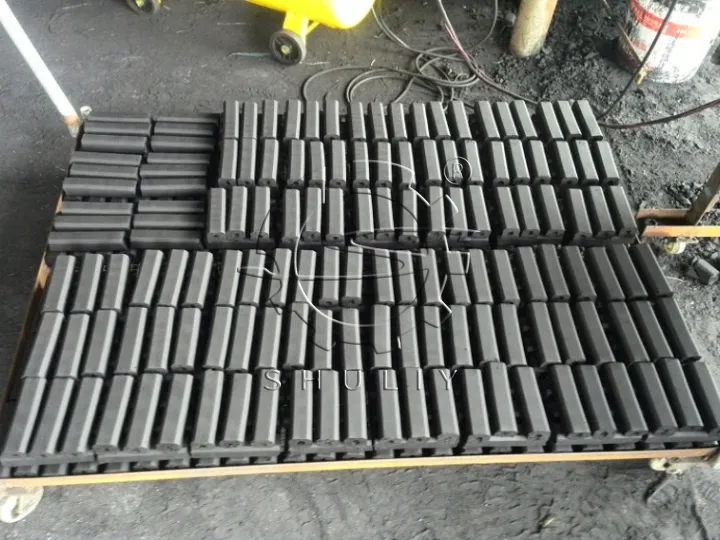
Sometimes the briquettes can be formed successfully but break during transportation or handling.
Poor mixing is one possible reason. If moisture or binder is unevenly distributed, some parts of the material may form properly while others remain weak. Material that is too dry can also have insufficient bonding strength.
Another factor is handling immediately after forming. Fresh briquettes may still be relatively fragile, so excessive impact during conveying, stacking, or packaging can cause breakage.

What material size is suitable for a charcoal rod machine?
A charcoal sticks making machine generally works better with properly prepared powder rather than large coal pieces.
If the feed material contains oversized particles, it should normally be crushed and screened before entering the forming process. Large particles can interfere with feeding, increase the load on the screw, and affect the consistency of the finished briquettes.
Why does a charcoal briquette machine get blocked?
Excessive moisture can make powder stick to the feeding system, screw, or forming mold. Foreign objects or oversized particles can also block the mold. Uneven feeding may cause sudden increases in machine load.
When blockage occurs, the machine should be stopped and the power supply disconnected before inspection and cleaning. Operators should never attempt to remove material from a running machine.
Regular cleaning and inspection of the feeding inlet, screw, and mold can reduce the possibility of repeated blockage.
Does higher pressure always mean better briquettes?
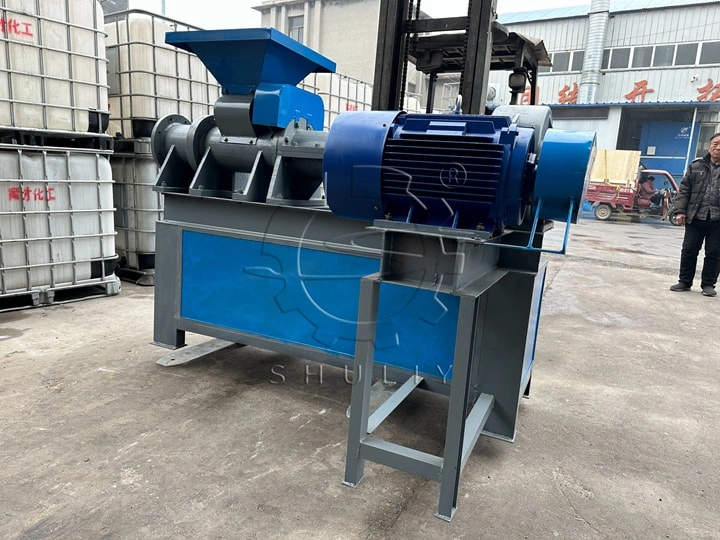
No. Briquette quality does not depend only on forming pressure. Excessively high pressure can increase the load on the motor and transmission components and may accelerate wear on the screw and mold.
The final result depends on several factors working together, including:
- Raw material particle size
- Moisture content
- Material composition
- Screw design
- Mold size
- Feeding rate
- Machine operating speed
The goal is to find suitable operating conditions for the specific raw material rather than simply increasing pressure.
Why is the actual capacity lower than expected?
The rated capacity of a charcoal sticks making machine does not mean that every type of raw material will reach the same output.
Moisture fluctuations, uneven particle size, poor material preparation, and unstable feeding can all reduce actual production.
For this reason, production capacity should be evaluated across the complete process rather than looking only at the theoretical output of the briquette machine.
What sizes of coal briquettes can be produced?
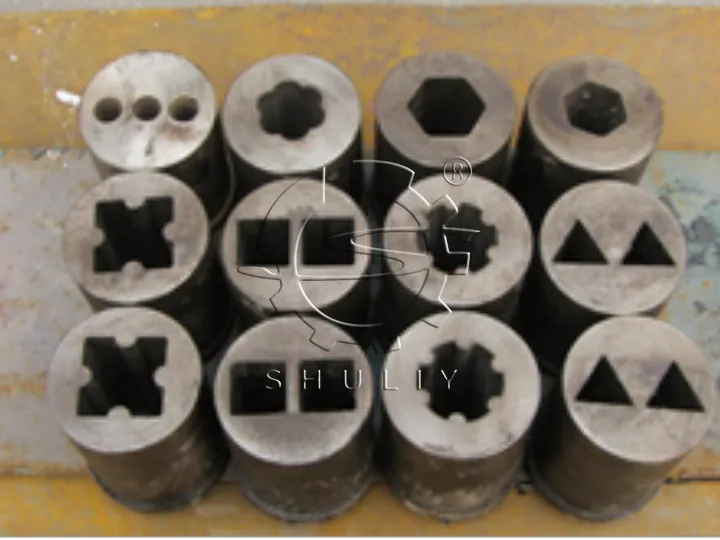
The size and shape of the finished briquette is mainly determined by the forming mold.
Different customers may require different briquette diameters, lengths, or shapes depending on their combustion equipment and application. The appropriate mold can therefore be selected according to the required finished product.
Before purchasing a charcoal sticks making machine, customers should clearly specify the required briquette dimensions. This allows the manufacturer to recommend a suitable mold and machine configuration.
How do you choose the right charcoal briquette machine?
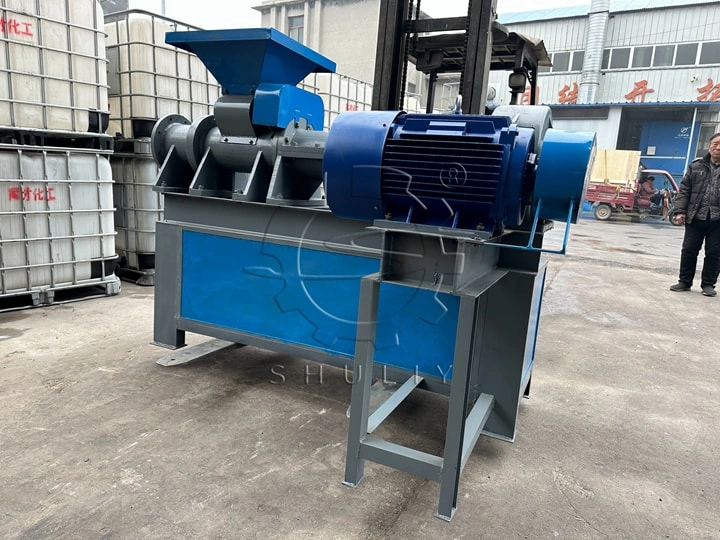
Price and motor power should not be the only factors considered when selecting a charcoal sticks making machine. The equipment needs to match the raw material and the intended production requirements.
The following information should be confirmed before equipment selection:
| Элемент | Information to Confirm |
|---|---|
| Raw Material | Coal powder, charcoal powder, or other powdered material |
| Raw Material Size | Original and processed particle size |
| Moisture Content | Moisture level of the feed material |
| Емкость | Required output in kg/h |
| Briquette Diameter | Required finished diameter |
| Источник питания | Voltage, frequency, and phase |
| Production Process | Single machine or complete production line |
| Final Application | Boiler fuel, industrial fuel, or other applications |
If you already have the raw material, providing its photos, particle size, moisture content, and target production capacity can make equipment selection more accurate.