Activated carbon is widely used for water purification, air treatment, gas filtration, and industrial adsorption. Unlike ordinary charcoal, activated carbon has a highly developed pore structure that allows it to capture and hold impurities.
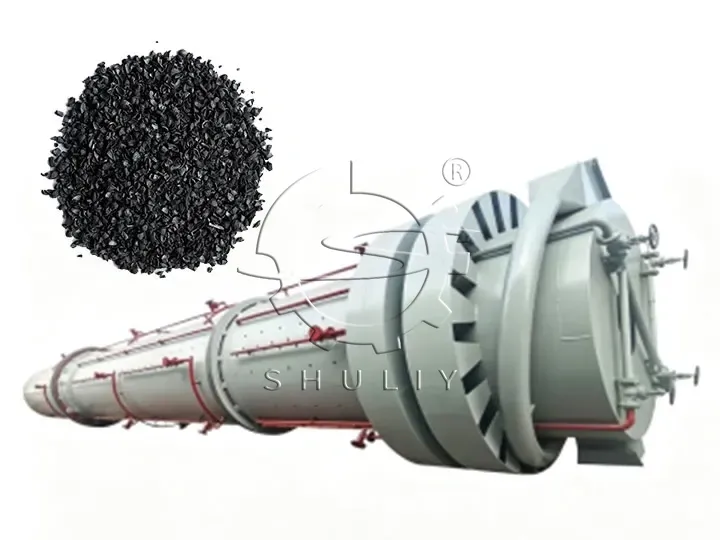
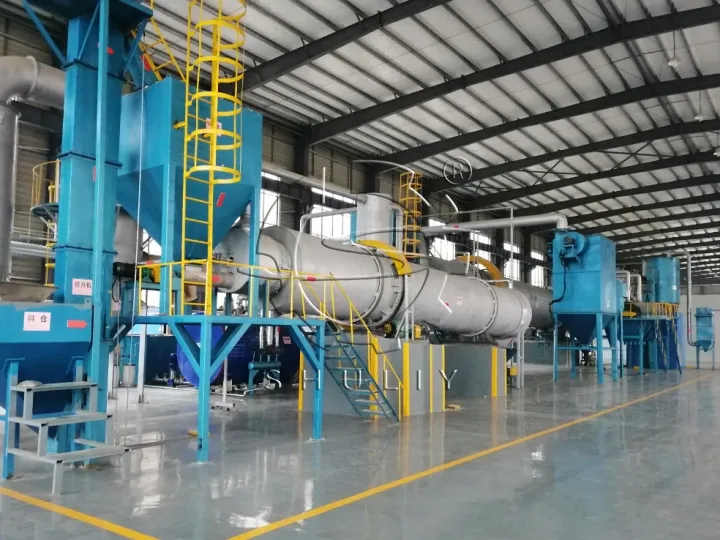
An activated carbon furnace creates this porous structure by treating carbonized material under controlled high-temperature conditions. The activation process removes part of the carbon structure and opens new pores, increasing the material’s internal surface area and adsorption capacity.
But how exactly does an activated carbon activation furnace work?
From charcoal to activated carbon
The production process usually starts with carbon-rich raw materials such as coconut shells, wood, bamboo, or other suitable biomass.
These materials are first carbonized to produce charcoal or char. Carbonization removes most of the volatile components and leaves behind a carbon-rich material.
The charcoal enters the activated carbon furnace, where controlled heat and an activating gas are used to develop its internal pore structure.
What happens inside an activated carbon furnace?
The basic principle is relatively simple: heat + controlled atmosphere + activation time.
Inside the furnace, the carbonized material is heated to a high temperature while exposure to oxygen is carefully controlled. In physical activation, steam or carbon dioxide is commonly introduced as the activating agent.
Under these conditions, a controlled reaction occurs between the carbon and the activating gas.
Part of the carbon is removed from the material, creating and expanding pores. As activation continues, the internal pore network becomes more developed.
This is why activated carbon can have a much greater adsorption capacity than ordinary charcoal.
How does steam activation develop pores?
Steam activation is one of the commonly used physical activation methods.
When steam comes into contact with hot carbon, it reacts with carbon atoms on the surface. This reaction gradually removes a portion of the carbon and creates new openings inside the material.
The process can be simplified as:
Carbonized material → Heating → Steam activation → Pore development → Activated carbon
The activation conditions need to be controlled carefully. If activation is insufficient, the pore structure may not develop enough. If the material is activated too aggressively, excessive carbon loss can reduce the final yield and affect the desired properties of the activated carbon.
What affects activated carbon performance?
An activated carbon furnace is only one part of the production process. The final properties of activated carbon can also be affected by several other factors.
- Raw material: Different raw materials naturally produce different carbon structures. Coconut shells, wood, bamboo, and other biomass materials can have different ash content, density, and carbon characteristics.
- Activation conditions: Temperature, activation time, steam or gas flow, and furnace atmosphere all influence pore development.
- Degree of activation: More activation does not always mean better activated carbon. Excessive activation can reduce yield and alter the pore structure in ways that may not suit the intended application.
- Particle size: Particle size affects both processing behavior and the final application of activated carbon. Producers therefore select or classify the material according to their specific requirements.
From activation requirements to right furnace
Since activation conditions vary with the raw material and final product, the activated carbon furnace should be selected according to your specific production needs. If you are planning to produce activated carbon, contact us with your material and capacity requirements for a suitable activation furnace solution.